Web Development

- Description
- Curriculum
- Reviews
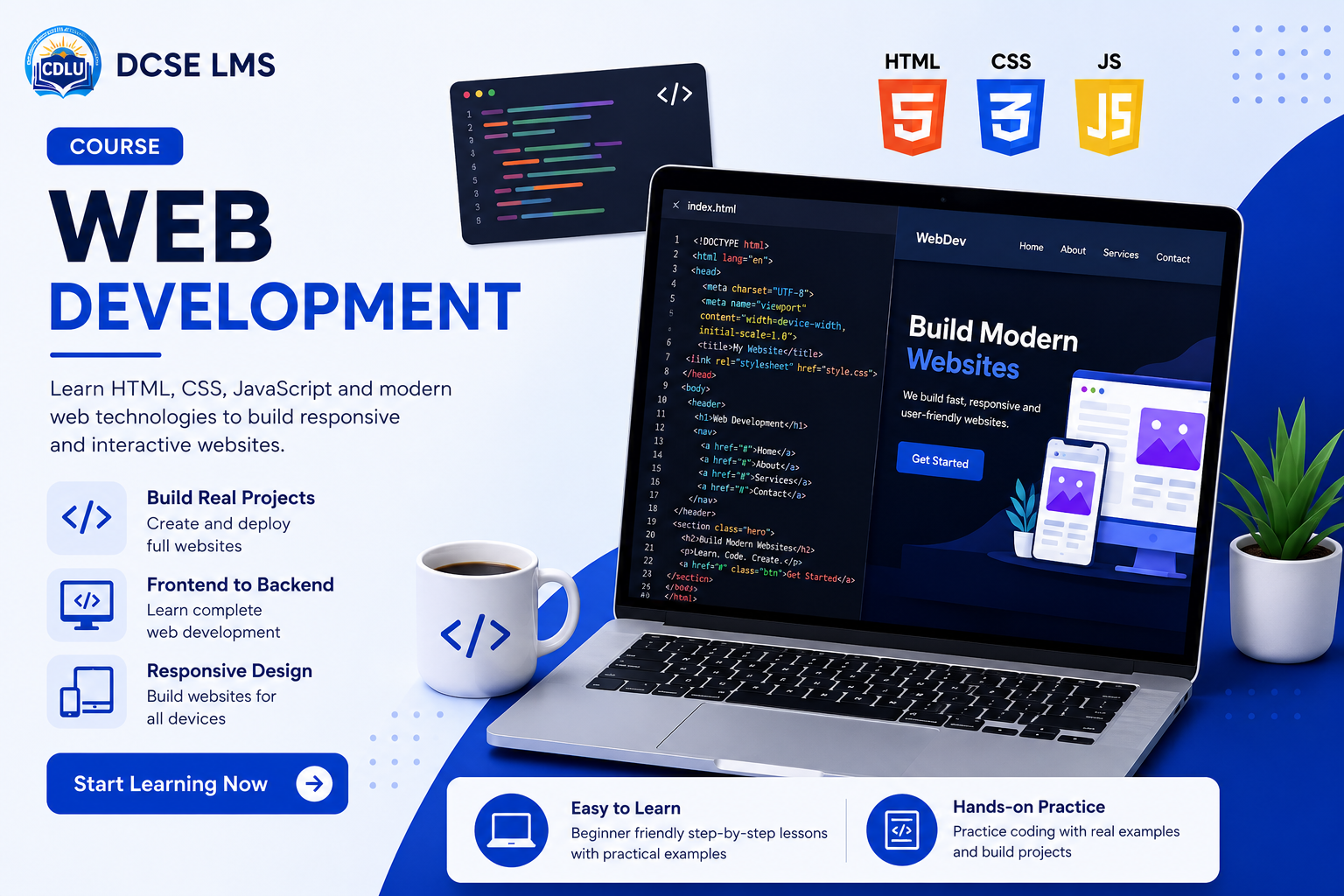
This course provides a comprehensive introduction to Web Development, equipping learners with the knowledge and practical skills required to design, develop, publish, and manage modern websites. Students will explore the fundamental technologies of the World Wide Web, including HTML5, CSS, JavaScript, XML, web hosting, and Content Management Systems (CMS). The course also introduces essential concepts of search engine optimization (SEO) and effective web content creation to help build user-friendly and search-engine-optimized websites.
By the end of the course, students will be able to create responsive web pages, apply styling using CSS, understand client-server communication, publish websites on web hosting platforms, and manage dynamic websites using popular CMS platforms such as WordPress, Drupal, and Joomla.
Course Learning Outcomes
After successfully completing this course, students will be able to:
- Understand the architecture and working of the World Wide Web.
- Explain the concepts of URLs, HTTP/HTTPS, DNS, web servers, and web browsers.
- Create structured web pages using HTML5 and commonly used HTML tags.
- Design attractive and responsive web pages using CSS selectors, properties, and different stylesheet techniques.
- Understand the basics of XML, JavaScript, and ASP.NET and their role in modern web development.
- Explain the concepts of web hosting, domain management, and website publishing.
- Build and manage websites using Content Management Systems (CMS) such as WordPress, Drupal, and Joomla.
- Apply Search Engine Optimization (SEO) techniques and develop effective web content for better search engine rankings.
Course Content
Unit I: Introduction to the World Wide Web
- Introduction to the World Wide Web (WWW)
- Basic concepts of URLs, HTTP/HTTPS, DNS
- Web Servers and Web Browsers
- Overview of HTML and HTML5
- Common HTML and HTML5 Tags
Unit II: CSS and Web Technologies
- CSS Syntax and Selectors
- Applying CSS using Inline, Internal, and External Stylesheets
- Basic CSS Properties: Color, Background, Font, Text, and Border
- Introduction to XML and its relationship with HTML and SGML
- Future of XML
- JavaScript Fundamentals
- Fundamentals of ASP.NET
Unit III: Web Hosting and Publishing
- Introduction to Web Hosting
- Need for Web Hosting
- Role of Web Servers
- Web Hosting Ecosystem
- Website Publishing Process
Unit IV: Content Management Systems and SEO
- Introduction and Evolution of CMS
- Key Components and Features of CMS
- Popular CMS Platforms: WordPress, Drupal, and Joomla
- Search Engines and Search Techniques
- Keywords and Search Engine Optimization (SEO)
- Effective Content Writing
- Techniques for Achieving Higher Search Engine Rankings
Practical Skills Gained
- Develop static websites using HTML5 and CSS.
- Add basic interactivity with JavaScript.
- Understand XML-based data representation.
- Publish websites using web hosting services.
- Install and manage websites using WordPress and other CMS platforms.
- Implement SEO best practices to improve website visibility.
- Create professional, responsive, and user-friendly web pages.
-
1
 Introduction to the World Wide Web
The World Wide Web (WWW) is a global system of interlinked web pages and resources that can be accessed through the Internet using a web browser. It enables users to view text, images, videos, audio, and interactive content by using web technologies such as HTML, HTTP, and URLs. The Web was invented by Tim Berners-Lee in 1989 to facilitate the sharing of information across computers.
-
2
Basic concepts of URLs, HTTP/HTTPS, DNS
-
3
Web Servers and Web Browsers
-
4
Overview of HTML
-
5
Common HTML and HTML5 Tags

 Google